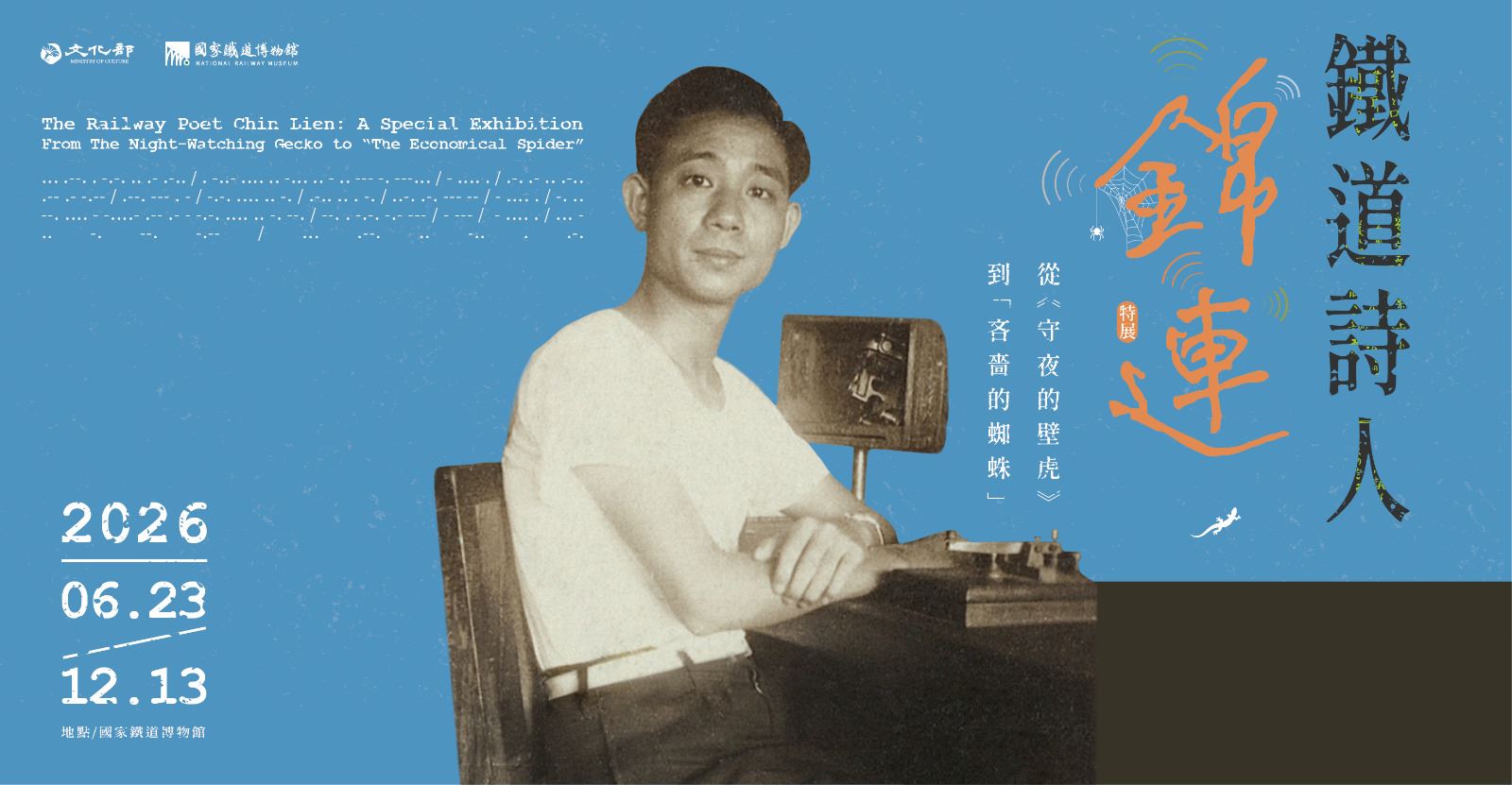
Chin Lien (1928–2013), born Chen Chin-lien, was from Changhua. From 1943 to 1982, he served for many years in the telecommunications office of Changhua Station, using Morse code, telegraphy, and communications technology to transmit vital messages required for railway operations.
As a “Railway Poet” whose life crossed the Japanese colonial period and the postwar era, Chin Lien’s writing bears witness to changes in language, identity, and history. Beginning with his railway career, his everyday life in the telegraph room, and his literary creation, this exhibition invites visitors to see the railway not only as trains, tracks, and stations, but also as a cultural system sustained by people, technology, language, and memory.
Session Information
2026/6/23 (Tue.)–2026/12/13 (Sun.)
09:30–17:00
Venue
National Railway Museum, Multi-purpose Hall
Information
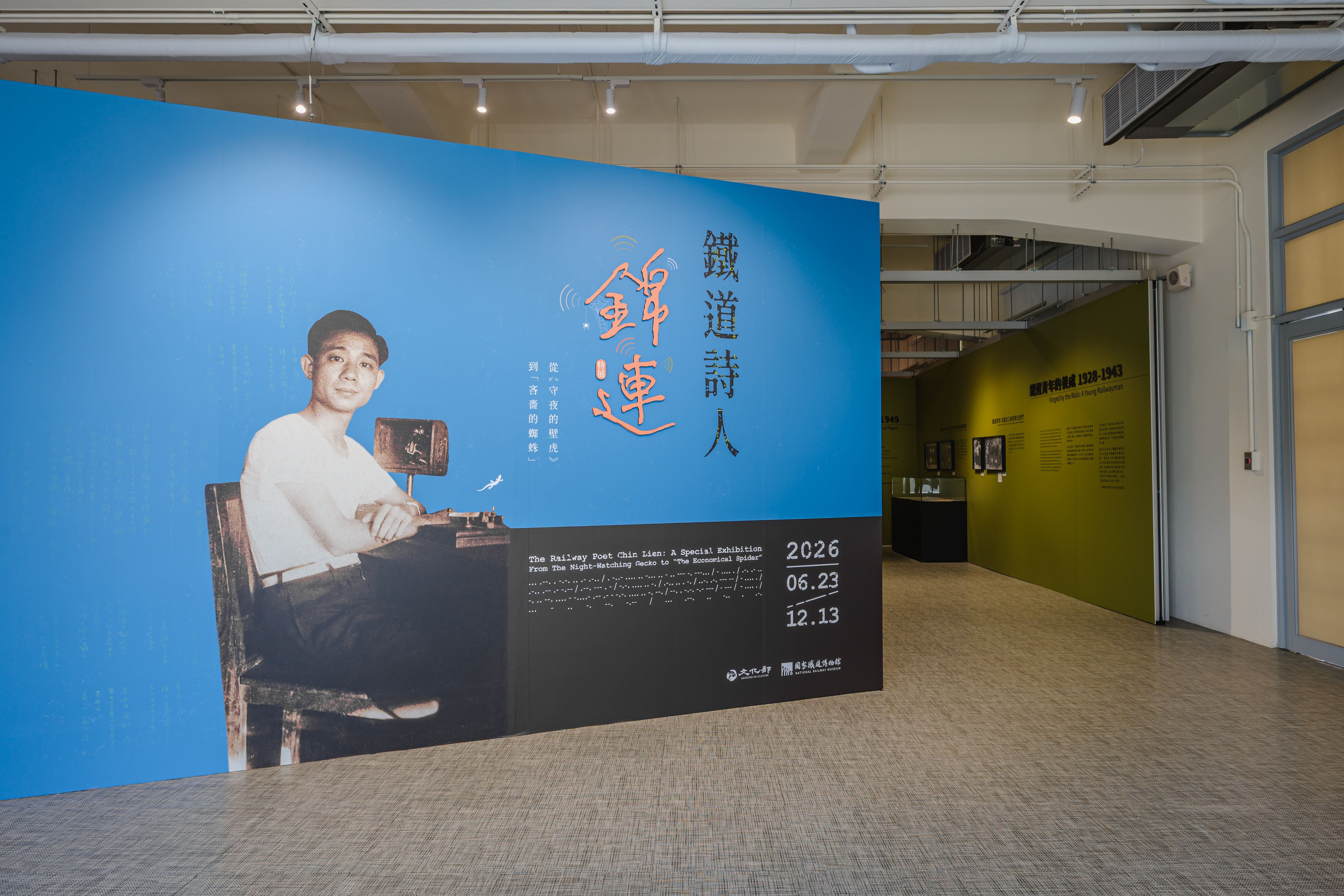 The railway was more than Chin Lien’s profession. It was also an important setting for his growth, work, and creative life. His father, Chen Yuan, once worked in the railway sector, bringing the railway into the family’s everyday life. In 1943, after graduating from the Railway Training Institute of the Taiwan Railway Association, Chin Lien returned to Changhua Station as a telegraph operator, beginning a railway career that would last nearly four decades.
Changhua Station was a key junction where the mountain and coastal lines met. During wartime, it bore the pressure of transporting supplies and military resources, while the telegraph room was responsible for relaying crucial messages between stations. After the war, as political authority changed, language and institutions shifted as well. Educated in Japanese, Chin Lien gradually adapted to Mandarin and to new telegraph systems, becoming part of a generation that crossed linguistic worlds.
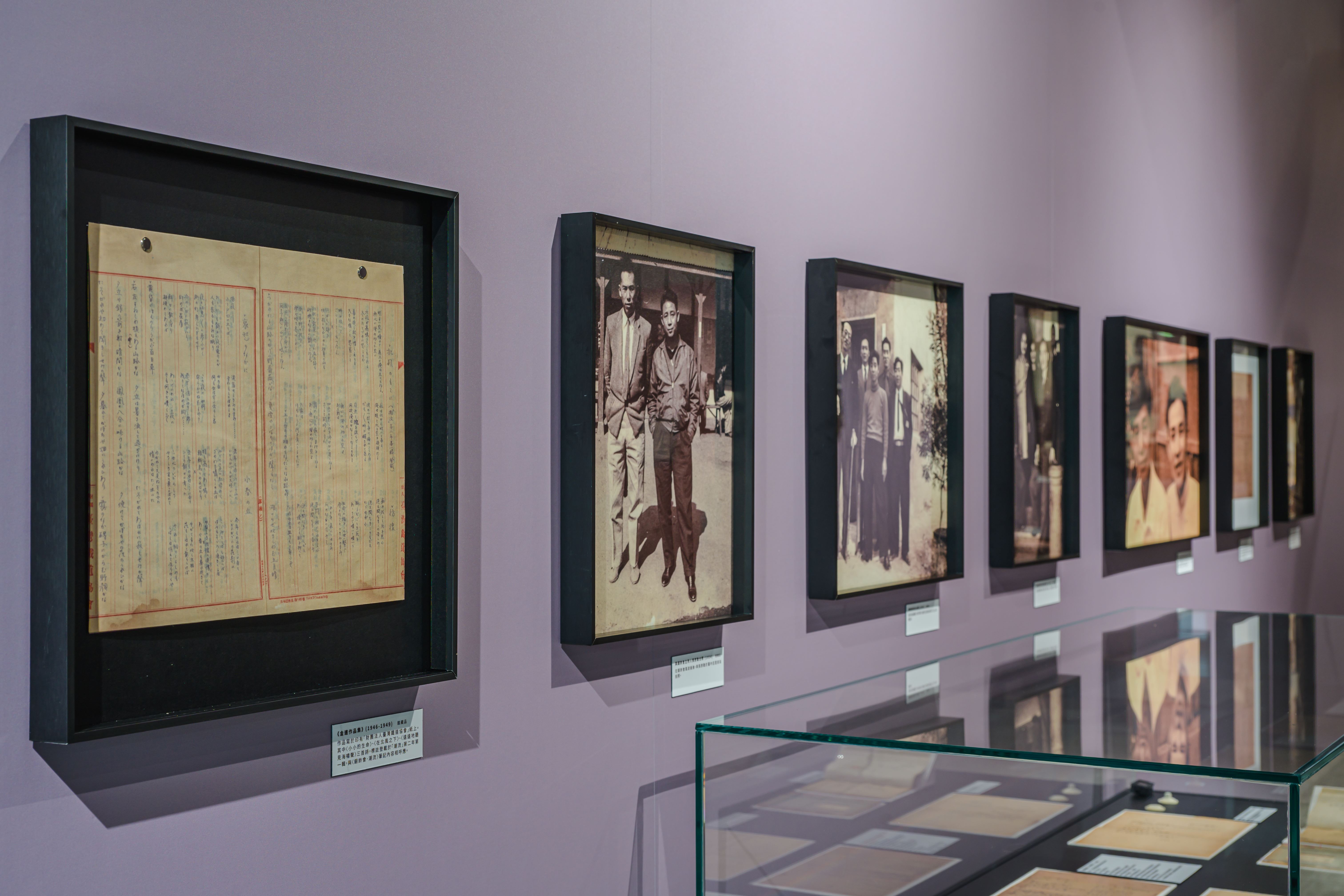 Amid shift work and night duty in the telegraph room, Chin Lien began teaching himself Chinese through reading, copying, and translation. He often wrote poems on the reverse side of telegraph forms. Through contact with Trends, a publication of the Silver Bell Society, he gradually entered the field of literary creation. Even under the shadow of the 1949 April Sixth Incident and the White Terror, he continued to respond through poetry to personal circumstances and social change.
After his marriage in 1958, Chin Lien and his wife, Wang Yumei, settled in the Changhua Railway Hospital dormitory, where everyday life was closely intertwined with the rhythm of passing trains. In 1964, he helped found the Li Poetry Society, and his poetic style grew increasingly mature. Through translation and writing, he continued to connect modern Taiwanese poetry with currents of Japanese literary thought. His long accumulation of railway experience and literary work gradually led him to be recognized as one of Taiwan’s important “Railway Poets.”
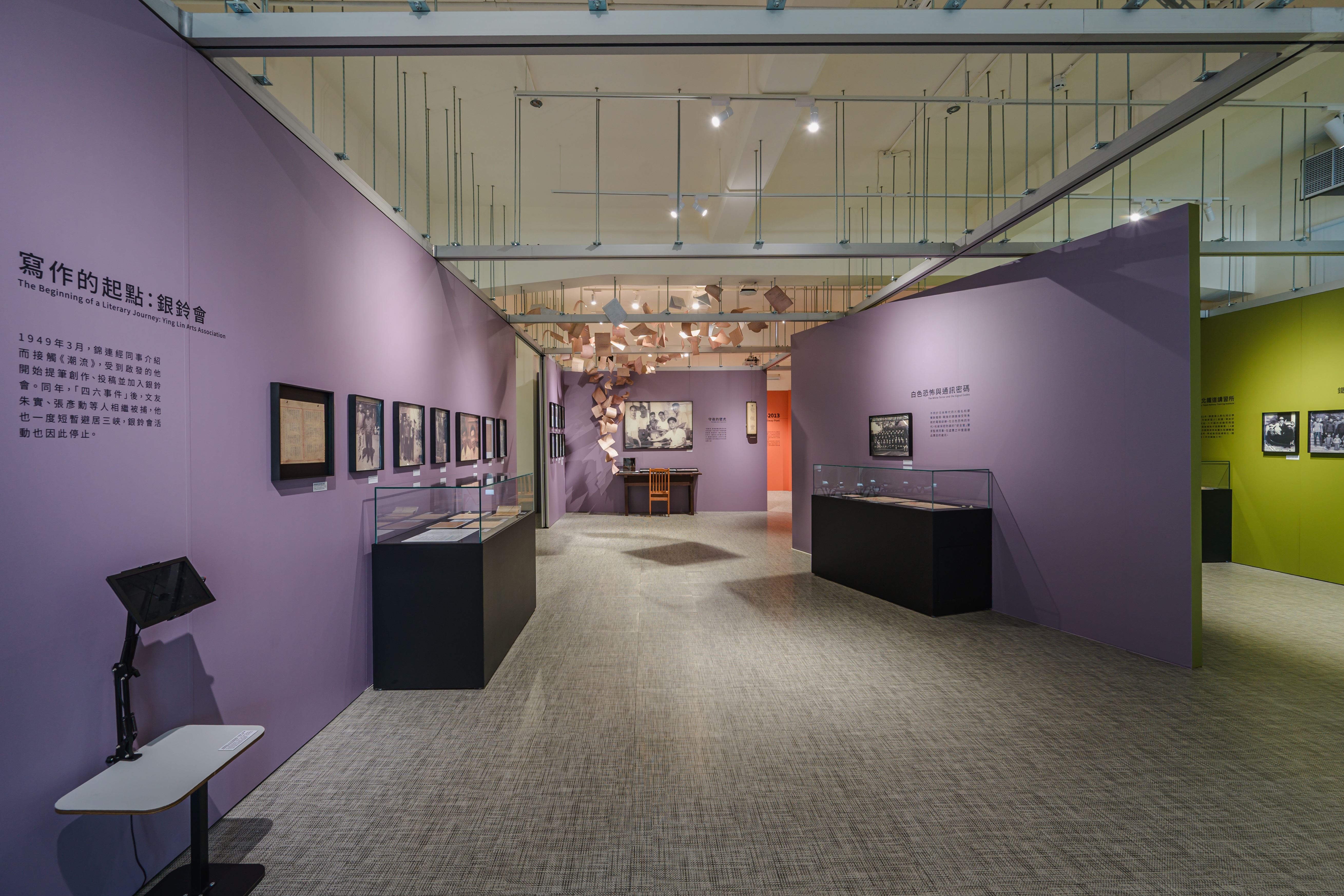
Centered on photographs, manuscripts, résumés, certificates, and railway communications materials donated by Chin Lien’s family and now held in the museum collection, this exhibition combines railway expertise with literary interpretation. It presents how Chin Lien traced a singular arc of life between telegraph signals, linguistic translation, and poetic lines. The exhibition also includes a reading area, video presentations, and an interactive Morse key experience, inviting visitors to begin from the workplace of a railway professional and rediscover another path where Taiwan’s railway culture and literary history meet.
Visitor Notes
► No advance reservation is required for this special exhibition. Opening hours are subject to the latest announcements by the National Railway Museum.
► Visiting hours: Tuesday to Sunday, 9:30 a.m. to 5:00 p.m.
► Please follow the guidance of onsite staff. Do not touch, move, remove, or damage any exhibition items.
► Eating and drinking are prohibited inside the exhibition area.
► The museum reserves the right to adjust opening arrangements according to site operations, construction work, historic-site maintenance, or event requirements.